Muzzled Dogs – the Why & How

It is about time I write about the use of muzzles in dogs! Before we begin, I would like to clarify that I do NOT support the use of aversive training tools/techniques/P+ as science has time after time shown that in the long run they are not effective and do not create lasting change (not to mention they can create far more serious problems – we can talk about this further in an upcoming post). Furthermore, as a veterinarian I took an oath to alleviate suffering. Punishment through physical force is suffering.

Buster living his best life wearing a muzzle at the beach in Tofino, BC.

When it comes to muzzles, there is a huge stigma regarding their use. They look scary, therefore they must mean the dog wearing them is bad/mean or their owner uses aversive training techniques. This is absolutely not the case. Muzzles are tools that can allow for dogs who are fearful or reactive to be given opportunities they may not have access to without a muzzle. For example, some high-arousal dogs may greet other dogs inappropriately, but once the initial introduction has passed, they are incredibly fluent in dog-dog social interactions. In other instances, dogs who have a medical condition called ‘pica’ (eating of non-food objects) may wear a muzzle to prevent them from ingesting things that they shouldn’t. This is an incredibly responsible route for owners who have had close-calls with foreign-body surgery. For leash-reactive dogs (dogs who lunge/bark at the end of a tense leash when they see another dog, for example), wearing a muzzle is a good visual cue for others to ask before approaching their dog, even moreso a cue to parents of young kids to not allow their child to excitedly run-up to the dog who may not be comfortable with such a high-energy interaction. As a veterinarian, sometimes a muzzle is needed in a dog in order to perform a physical examination, give a medication or collect blood samples when a dog is sick (although many behaviour-savvy vets will also likely suggest pre-visit medication in these cases when possible).

In summary, muzzles are used for a variety of cases:

  • Prevention of ingestion of non-food items, feces, toxins when outdoors or indoors
  • For nervous or highly aroused dogs in social interactions (with dogs, people, children, etc)
  • For dogs who are at the vet & are either nervous at the vet, or may be painful
  • A visual cue that a dog needs space (this really shouldn’t be necessary, however many humans do not understand or have never been taught proper dog interaction skills)
  • Possibly in an emergency situation where your dog is hurt but you have to lift them to bring them to an emergency facility & do not want to get bit incase it hurts when you lift them (think: broken leg on a hike)
  • Prevention of licking/chewing of a surgical site
  • Occasionally for veterinary or grooming procedures (nail trims, ear cleaning, vaccine, etc.)
  • In some jurisdictions it is the law to have certain dogs or breeds wear muzzles in public
Buster wore his muzzle a lot when he was recovering from a bite wound on his front arm. Most importantly, it prevented him from prematurely ripping out the drain or adding extra bacteria to the situation through licking.

How do I choose a muzzle that is right for my dog?

There are so many options when it comes to choosing a dog muzzle. The most important factors will be fit, material & desired use. One thing to note is that fabric muzzles that hold your dog’s mouth shut should ONLY be used for extremely short instances such as a quick nail trim, a vaccine injection at the vet or ear cleaning. In all other cases a basket muzzle would be the humane choice. Basket muzzles allow your dog to pant (something dogs do when they are warm or stressed), take treats during training, drink water and generally engage in normal dog behaviours.

Buster has been wearing a muzzle when interacting with Mila who is only 6 months old. She has a lot to learn about interacting with other dogs and Buster tends to be far less patient with puppies than adult dogs. This still allows for play & for Buster to give a little growl if he thinks Mila is being too much, but also keeps Mila safe from Buster getting a bit too upset by her crazy puppy antics. Mila now also has a basket muzzle of her own to prevent her from eating things she shouldn’t on walks.

If you are looking for a muzzle to prevent ingestion of objects, any basket muzzle may work. If your dog attempts to eat feces on walks, a vinyl basket muzzle or a basket muzzle with a stool guard may be needed.

If you are wanting a muzzle to help with dog-dog introductions, I would recommend a softer basket muzzle as the wire basket muzzles can hurt quite a lot when a dog runs into another dog, human leg, jumps up, etc. The softer types would include baskerville (many of these don’t fit right on a lot of dogs, but they are relatively cheap & easy to find), biothane custom dog muzzles, vinyl basket muzzles, greyhound racing muzzles & more. Wire basket muzzles are a great option if you are looking for something to be used on leashed walks – they have many sizes & are also bite-proof (as are some of the vinyl muzzles). Below I have images of a variety of muzzles (P.S. that is not Buster’s actual collar, it is his leash extender, we had an oopsie and Buster ended up being a naked dog the day we took these so we made-do):

Baskerville Ultra muzzle. A good option for low bite-risk dogs (as they can still *technically* bite through this if motivated enough), a good option for dog-dog interactions. I also added a strip of “moleskin” (found in the first aid section of any pharmacy) to the nose bridge & removed the forehead strap for extra comfort. Buster wears this muzzle for 7+ hours at daycare on a weekly basis, depending on how rowdy his playmates are.
Leerburg wire basket muzzle (size 29C). Notice that that the nose does not touch the tip of the muzzle & there is plenty of room to pant. This is the muzzle we often use for leashed walks as Buster seems to be most comfortable with it. It would NOT be a good option for dog-dog interactions that are planned as it hurts quite a lot when it hits you (from experience Buster has run into the back of my leg with it before).
JAFCO vinyl basket muzzle. This is a softer muzzle & is another good option for dog-dog interactions. There are options with and without a treat-hole. The ones without a treat-hole would be considered “bite-proof” and may also be a good option for dogs who ingest feces on walks. The forehead strap cannot be easily removed. This muzzle may be a tad bit too small as Buster cannot have a “full pant” but its pretty close.

Other options I do not have photos of would be greyhound muzzles, custom biothane or other custom muzzles. The Muzzle Movement has some pretty fancy muzzles that are being released – we have one on order & I will add it to this blog once arrived. I have not pictured the fabric “grooming” muzzles here as they are not recommended for regular use.

Sizing Your Dog for a Muzzle

For sizing your dog for a muzzle, there are several good resources online. I would recommend the following:

Measurements you will need are: 1) snout length 2) muzzle width 3) full pant height 4) full pant circumference. You can use a tennis ball (or smaller size chuck-it ball for a smaller dog) and measure that way. Here are my very blurry photos of doing this with Buster before we purchased a proper muzzle:

I thought it would be good to also include what a poorly-fitting muzzle would look like. This was the first muzzle we ever bought which seemed to “fit” but was not appropriate for any amount of time longer than maybe 10 minutes:

As you can see here, there is no room for panting, the muzzle is riding up into his eyes, his snout touches the end of the muzzle and overall he appears fairly uncomfortable with it on.

Muzzle Training: Wait, I can’t just use it now?

For muzzle training, you do need to have reasonable expectations. It is not reasonable to expect that you will buy a muzzle today & tomorrow be walking around the neighborhood with your dog wearing said muzzle, happy as a clam with no distress or attempts at removal. For a food motivated dog, I would suggest 2-4 weeks of training before you can expect to have your dog wear it comfortably. Longer if you expect your dog to wear it for extended periods of time. There are some great resources on the muzzle up project (as linked above) for training. Your dog should not be scared of the muzzle in any way. For Buster, we used a lot of food just for him to make positive associations with the actual object itself before ever even putting it on or even having him slip his nose into it. Once he was comfortable enough to not immediately rip it off, we went on a walk immediately with it on (literally a 5 minute walk) to help the environment positively reward him for wearing the muzzle (with sniffing in addition to the treats I gave him as often as possible). Here is the thing: Buster could rip off any of his muzzles at any time, but he doesn’t. If your dog has a negative association with the muzzle, they will take it off – and attempting to tighten it more will only add to their distrust. Take your time, and remember: muzzled dogs are good dogs too!

A happy, comfortable dog with adequate panting room.

Living with Plants and Pets (for plant people like myself who also have pets)

Any other fur-parents caught on to the wonders having plants inside? I sure have. I am most definitely embarrassed to share the number of houseplants we currently share our space with – but it is many. I never liked having house plants. They would always just die and make me feel bad about myself. Then, a couple Christmases ago I got my sister a plant. And then I wanted one. And then I got more. And more.

Of course, being a plant enthusiast comes with added complications. What about the pets? Well, aside from the inevitable destruction our happy-tail dog and every mischievous cat would cause, there is of course the concern of safety for them! I will be honest up front: not all of my plants are 100% “safe” for pets. How did I go about deciding where to draw the line? I will share my lists of current plants towards the end of this article.

First, when beginning to fill your house with plants (or even purge ones you have to make a pet-safe environment for them), figure out the name(s) of each plant and write these down.

Next, type into google “[plant name] ASPCA” – typically the first result will lead you to the ASPCA Animal Poison Control Website’s page on that specific plant. For example, if I search “Sago Palm ASPCA”, this is what shows up:

As you can see above, the ASPCA names the actual toxin in the plant, who it is toxic to, and what it causes. A sago palm would absolutely not make my list in combination for two reasons: 1. It is extremely toxic (I could stop there) and 2. It looks like grass, and my cat would most definitely try to chew on the leaves.

One family of plants that are particularly safe to have around pets are those of the Calathea family. This includes all varieties of “prayer plants”. I have several of these – they like to be kept fairly moist, but I don’t have to worry if my cat eats them. She does, however, like to “smack them” to get my attention when she feels like she is not getting it.

I did mention that I *DO* keep some toxic plants at home. The plants I keep at home that are toxic are ones that 1. My cat has minimal interest in (ie. they don’t look like fun strands of grass) and 2. Only cause very mild signs if ingested – some burning sensation in the mouth or stomach upset if they really keep trying to eat them – typically these are “Insoluble calcium oxalate containing plants or mild saponins”. The most common one would be pothos (aka. devil’s ivy):

The plants I would never allow to enter into my house would be lilies – true lilies (ie. tiger lilies, easter lilies, day lilies, etc.), lily of the valley (as well as Sago Palm as mentioned above). True lilies cause acute kidney failure and death in cats – they don’t even have to chew the plant. The pollen can be enough to cause injury. If your cat even so brushes against the pollen of the flower, then cleans themselves off later, this could be end-game for your precious pet. The water in the vase is also toxic.

Lily of the Valley is another plant your pets (BOTH dogs and cats) should steer clear of. Although not common indoors, my husband and I’s first rental house had a giant patch of this growing right outside the door. Although we didn’t dig it up, our pets were both fully supervised at all times when outside. With the severity of the consequences (heart attacks, coma, seizures) this isn’t one worth inviting into your yard.

Now that we’ve got that out of the way, I will give you a general list of what I keep in my house.

Totally safe indoor plants:

  • Pilea family (Chinese money plant/friendship plant, amongst others)
  • Calathea family (Prayer Plants – multiple varieties – aka Marantacea family)
  • Lipstick plant (I have multiple – the colors of leaves can vary as can the flower colors, they like to vine)
  • Chinese Money Tree
  • Christmas Cactus
  • Grape Ivy (MOST ivy varieties are very toxic!)
  • Mimosa pudica / sensitive plant
  • Boston fern, bird’s nest fern and Staghorn fern (MANY fern varieties are toxic)
  • Banana plant
  • Spider Plant
  • Cat grass (wheatgrass or oats)
Grape Ivy – this came from a cutting I took from my mom’s very old plant!

Not safe, but likely not going to cause death either (oral ulcerations CAN still be serious, if your cat isn’t eating for more than a day, get them to the vet ASAP. Three days without eating in a cat can cause life-threatening fatty liver disease!):

My big bird of paradise I purchased at IKEA earlier this year.
  • Pothos / devil’s ivy (these are really easy plants to take care of – they thrive on neglect)
  • Satin pothos
  • Snake plant
  • Monstera varieties + Rhaphidophora tetrasperma (split-leaved plants)
  • Bird of paradise (the flower/fruit is the most toxic part)
  • Aloe vera
  • ZZ plant
  • PEACE LILY (This is not part of the lily family OR lily of the valley)

The ASPCA has a full list of toxic plants (dog list, cat list, horse list) on their website.

Thank you for reading!

Financing Veterinary Care & How to Make Decisions Regarding Pet Insurance

By Brenna Sakatch, DVM December 27, 2021

Veterinary medicine – like human medicine – is expensive. Note that expensive does not mean overpriced. We all want the best, safest, most effective options for treating our furry family members – which comes at a cost. Gone are the days of veterinary medicine being a broad-stroke treatment for all ailments (think, steroids and antibiotics for everything). Today, veterinary medicine trumps human healthcare in many aspects – quick access to care (no 7 month wait time for a CT or MRI), and wide range of diagnostics and treatments available at your primary care doctor (full bloodwork, x-rays, dentistry, surgery, etc.). I certainly don’t go to my family doctor expecting to get x-rays, bloodwork, a mani/pedi, hysterectomy and a dental cleaning all in the same office – but in veterinary medicine this is the standard.

Buster enjoying a bowl of charcoal mixed with food after his dark chocolate ingestion and vomiting induction

With all progress and increasing standards of care – costs are of course a factor. That x-ray sitting in “the back” comes with a price tag. The blood analyzers come with a price tag. The convenience comes with a high cost of overhead. Even regarding dentistry – our pets need a full general anesthetic to get the same thorough dental exam, x-rays, cleaning and extractions that you most likely sit awake with your mouth open for at your dentist.

When considering a new pet, or even those you’ve had for years – it is important to consider how you will finance their healthcare. There are many options – but having prepared and made a decision well in advance is paramount. Today we will go through a couple options to consider as you either bring home your new pet, or even contemplate what to do as your furry friend reaches their golden years.

Savings Plan

Many pet parents are keen on savings plans – and this works in many cases. The idea is that you put a certain amount of money aside each month to cover unexpected expenses. The downsides to this is – what happens when you’ve only had your new pet a week or a couple months? A $3000 surgery or hospital bill will likely be a lot more than the monthly amount that has been accumulated. For owners with multiple pets – say a couple cats and a dog – a larger savings plan may actually be a great option – as long as not everyone needs the account at once. It allows for a “larger pot” that is used for whichever pet needs it at the time, and of course replenished as needed.

Coffea contemplating trying my coconut latte

Care Credit / Pet Card

Care credit is a loan service that pet parents can apply for – it typically requires some work to be done in advance, and of course has limits. This may be a good option even initially while building a savings account for your pet to have in case you need it. Typically, the company will give you a maximum, and they will pay the clinic directly when bills come up. Many pet parents don’t know about this option. A credit card may also work just fine, but the interest rates with these companies are much lower as they are essentially a medical line of credit.

For Information on PetCard (Canada): https://www.petcard.ca/

For more information on Care Credit (USA): https://www.carecredit.com/vetmed/

Pet Medical Insurance

Pet insurance is what I am most likely to recommend, especially when bringing home a pet for the first time – before is has any pre-existing conditions. Pet insurance works similarly to medical insurance in places that still use private healthcare (such as in the United States). The companies will lay out their terms (what is covered vs. not covered) and when a vet bill comes up, either you or your vet submit the invoice for reimbursement or direct payment of the amount they agree to cover. Most insurance companies have a deductible you pay (what you pay of a bill before they will cover anything) and a % coverage (often 70-90% depending on the plan and company). So for example, say your new dog swallows a toy and needs an emergency surgery. Let’s say your deductible is $500 and the % coverage is 80%. Now let’s say that the final bill is $5000 (likely on the low-end for a referral center). You pay $500 + 20% of the remaining bill. The total amount you would pay would be $1400 (500+20% or $900) rather than the $5000. Some companies even allow for the option of a $0 deductible, which of course comes with a more costly monthly plan.

Buster after his intra-dermal allergy testing at the specialty centre.

Picking a pet insurance is overwhelming to say the least. What I like to explain to clients is with pet insurance, you have two general categories: “per condition deductible” and “annual deductible”. Per condition deductible means that for every problem your pet has, you have to pay the agreed upon deductible. Annual deductible means that you pay the deductible once per year, regardless of how many unrelated problems occur in that year. Sounds like annual is better? Yes and no – annual deductibles often come with limits or caps of how much they will cover. For example, an annual deductible may be $300/year, but have an annual cap of $5000. This means if you have a couple costly bills that total say, $12,000 in a given year, you will be covering $6500 of that yourself, or be forced to decline optimal care. Per condition deductibles are paid once for the condition, then covered for the lifetime of the pet – which makes them great for life-long conditions like allergies, endocrine diseases such as addision’s, or arthritis. They often don’t come with limits or caps, but are harder to budget for in advance.

When deciding on pet insurance, you need to decide what makes the most sense for your situation. Are you looking for something that is there just to cover the really big bills (such as a TPLO or knee replacement surgery – which runs ~$4000-8000 per leg) , but smaller visits such as an eye appointment are no big deal? Or are you looking for a plan that will help with the smaller various issues your pet may come across in a year (such as dogs who get into a dog fight one month, then an eye infection next month, then vomiting the next month), but may not cover the really big bills (such as a bilateral hip replacement, ~$20,000)? Some companies also have the option to pay the vet directly, but more companies actually pay you later, once paperwork has been sent in. This may mean putting the visit on your credit card until your payment comes in the mail. Also be sure to make sure any company you choose covers hereditary conditions or breed-specific conditions (for example, hip dysplasia may not be covered in German shepherds, and spinal disease may not be covered in frenchies and dachshunds). Most companies also do not cover routine care – such as dental cleanings (but may cover extractions, root canals, etc.) or parasite prevention and vaccines. Be sure to read the fine print before you commit, and sign your pet up as soon as you bring them home!

I also recommend looking at what it would cost to sign your young pet up now, vs. what it would cost when they are 13 years old. When I did this for Dana – some companies gave a monthly cost of only $30 per month if she was a puppy, and $250 per month if she was 8 years old. I contacted the company to see if she would have that cost go up to that amount if she were a puppy when signed up – and they confirmed, yes – it didn’t matter that I had signed her up young. This means that although you planned for a certain amount each month, it may even double from one age category to the next. When I looked into Trupanion, the cost was the same per month for her breed whether she was 8 weeks old or 10 years old, and other companies do function in a similar way.

Dana’s right hip fracture – Trupanion covered the surgery, bloodwork, x-rays & hospitalization.

I personally use Trupanion – which involves a per-condition deductible (although I am not affiliated with or receive any compensation for saying so – they don’t even offer vet-specific discounts). I purchased this insurance on Dana prior to her passing, which despite her various pre-existing conditions (liver disease, thyroid disease, arthritis) still covered her emergency hip fracture surgery (~$6000). For Buster, who suffers with allergies (to almost everything – grasses, dust, trees, certain foods, etc), Trupanion has already covered thousands in allergy testing, pricey anti-itch medications and immunotherapy, and he’s only 2! While I haven’t used it for smaller visits (chocolate ingestion, abdominal x-rays, routine bloodwork), I am happy to know that going forward, they will pay 90% of Buster’s allergy-related costs for the rest of his life. Coffea also has Trupanion – which I thankfully haven’t needed yet for her (although with her juvenile dental disease, I know tooth extractions will be coming soon). My monthly amount changes each year – sometimes it goes up a little, and some years it goes down a little. I have other veterinarian friends who have had success using other insurance companies including PetsPlusUs and PetSecure.

Special considerations for older pets: If you have an older pet you are wanting insurance for, be sure to check what they will actually cover. Some companies require a full physical exam and geriatric bloodwork within a month of the insurance sign-up date in order to cover anything (this helps them not cover anything that may be pre-existing but not previously noticed). Trupanion allows pet parents to sign their pets up until the age of 14 (they will still cover them after this age, but you cannot newly sign up over this age) without the above requirements. When I signed Dana up for insurance her most recent bloodwork was performed 6 weeks earlier, so I decided to use Trupanion given that I wouldn’t have to spend the money to repeat this in such a short window.

What about waiting periods? All pet insurance companies have waiting periods – that is typically 30 days long in which you are signed up and paying for insurance, but anything that comes up won’t be covered, and may be considered a pre-existing condition if diagnosed in that window. For example, you’ve had insurance for 3 days and then your dog eats a toy and needs surgery – not only will the insurance NOT cover this surgery, but they may consider not covering any foreign body (toy ingestion) treatments for the remainder of the dog’s life. In order to avoid a waiting period, you can bring your dog in for an exam with a vet and request an insurance trial – both Trupanion and PetSecure offers this. That way, your insurance is effective the minute your leave the vet office, and you only need to confirm you would like to continue coverage after the 4 or 6 weeks trial period ends.

What if I want to switch insurance companies? If you have a healthy, young dog who has not been diagnosed with ANY ailments this is an option. Please note that most dogs do develop some degree of dental tartar early on in life, and although not a concern medically, your veterinarian likely has written this down as a part of their legal medical record. This means that if the insurance company reads that there was “slight dental tartar”, they may not cover any dental disease with the exception of accidents such as a tooth fracture. The same goes for things like vomiting – if your dog ever vomited once and your vet did their job and wrote this down in their medical record, the insurance companies may not cover anything related to vomiting and diarrhea. Another example would be skin conditions – if your dog has ever had an ear infection under their current plan, a new insurance company you switch to will likely not cover anything related to skin infections, itch, allergies, etc. I usually don’t recommend switching insurance companies on a pet you have, but you may decide to go with a different company for different pets (for example, my friend Dr. Patricia has Trupanion insurance on her dog, and PetsPlusUs for her cats).

If you are wanting to further compare companies, you can use the following websites:

In Canada: https://www.comparepetinsurance.ca/

In the USA: https://www.pawlicy.com/blog/pet-insurance-comparison/

Thank you so much for reading!

Why do nail trims matter? Plus tips on how to do them!

I am going to write today about one of my favorite topics: nail trims.

Buster gets nail trims every 2 weeks. This keeps him comfortable and our floors nice!

Why do dogs need nail trims in the first place?

“Click-clack-click-clack-click-clack” the marvelous sound of dog nails on a nice hard surface. Did you know, that this sound isn’t always normal? Dog nails, like human nails, continue to grow throughout their lives, and rather quickly at that. While some dogs who spend their lives outdoors don’t mind their nails being on the long side (read: SOFT DIRT), most of our domesticated canines spend a considerable portion of their lives walking on hard surfaces, such as tile, hardwood, laminate, cement and concrete. Since they don’t have the cushion of dirt under their soft claws, extra attention needs to be given to keep their toes comfortable.

When dog nails grow long, they begin to make contact with the hard surfaces they walk on. This pressure on the nail actually pushes the toe into positions that cause continual excessive strain on the joints over time. See this diagram (I drew myself), below:

Happy joints with short nails.
Excess strain and pressure on joints with long nails.

In the first image, the nails do not make contact with the ground in a standing position. In the second image, the longer nails push the toe joints into excessive strain, which causes chronic pain over time.

By trimming your pup’s nails on a regular basis, this discomfort can be avoided.

What if my dog’s nails are already so long? I am afraid to cut them too short and make them bleed!

Dogs who have had long nails for a long time will still benefit from the elimination of extra strain on their joints. As mentioned, cutting them too short, too quickly is a concern. As dog nails are allowed to grow out, their vascular portion (or “quick”) also grows out. This is where the blood and nerve resides within the nail, and can be quite painful if cut.

The dotted green line indicates where we would ideally like to trim the nail (right before the quick)

The good news is that frequent nail trims (as often as twice a week) can cause the “quick” to recede and get shorter. The important part about this is that you must clip the nails short enough to reach the “pre-quick”. The pre-quick is the lighter, soft spot in the middle of the nail you will eventually reach when trimming tiny pieces off of your dog’s nails. It is always important to stop at the pre-quick to avoid reaching the quick. Thankfully, as the dog walks, this puts pressure on the pre-quick, which in-turn causes the quick to recede. This allows you to then clip your pup’s nails even a bit shorter when you trim them again a few days later.

Pre-quick or “stop sign” for white/clear nails.
Pre-quick or “stop sign” for black nails. Any further will cause bleeding and pain.
This is what you are looking for. This is the pre-quick; your “stop sign”, regardless of your dog’s nail color. Buster’s nails are a mix of colors (clear and black). Both the toe I am pointing to and the one two over are the perfect length to stop.

Once your dog’s nails are at a good length, maintenance trims should be done every 2 weeks. I notice that if I don’t trim Buster or Dana’s nails at least this often, they start “click-clacking” all over again.

My dog is scared/unwilling/difficult to trim nails, what can I do?

If your dog won’t allow you to have their nails trimmed, there are a few options to consider:

  • Positive reinforcement is KEY to successful nail trims. This may mean spreading out peanut butter* on a large plate or dish and allowing your dog to lick the peanut butter off as you trim. Often, your pup will prefer to stand while doing this. In this case, you would trim your dogs nails in a similar way to picking-out a horse’s hooves, by gently lifting their paws back one at a time.

*Make sure any peanut butter you use does not contain xylitol. Xylitol is an artificial sweetener and is extremely toxic to dogs. Better yet, use natural peanut butter that contains only peanuts and nothing else.

Buster, our mutt is a reserve dog. He did not receive any nail trims to our knowledge during his first year of life. He is extremely strong and nearly impossible to restrain. This is the ONLY way he will allow for nail trims. Thankfully, if you have a food-motivated dog, nail trims can be quite enjoyable for both parties involved.
In both pictures Buster is busy licking peanut-butter out of a slow-feed dollar store dish (it makes him have to work harder to get it all, giving me plenty more time to trim every toe)
  • Alternatively, a second person can continually give treats or hold a KONG stuffed with natural peanut butter or wet dog food while you trim your dog’s nails.
  • If neither of these work, ask a veterinary team or groomer that you trust to trim your dog’s nails for you. They clip many dog nails every single day as a paid service, so it takes the guesswork out of it for you. You can even request that your veterinary team show you how they do it in person, so you may become more comfortable doing it yourself at some point. Some dogs who are very fearful and not accustomed to nail trims may require this route, regardless of your comfort level.

Regardless of the route you go, remember that dog nail trims are an important part of your dog’s overall health and comfort!

What kind of nail clippers do you recommend?

Scissor-style nail clippers are your best bet. You will have the most control over how much you trim. These often come with a “nail-guard”, which is not an accurate way of gauging how far you can trim your dog’s nails. I recommend to bend it back so it’s not in your way. Guillotine-style nail clippers are not recommended as they are too easy to slip and trim too far.

This is a scissor-style clipper. Notice how the “nail-guard” is bent backwards.

What if I cut too far?

If the nail starts bleeding there are a few options:

  • “Kwik-stop” styptic powder can be purchased at a local pet store
  • Corn starch may work (just make sure your dog doesn’t lick it off)
  • A bit of gauze and some pressure may also do the trick!

I hope this article was of some help to you or someone you know. Thanks for reading!

Article written by Dr. Brenna Sakatch © 2020 vetblog.home.blog

Starting Out

I am now working as a veterinarian in Olds, Alberta. Feels like so much time has passed yet none at all with this strange state of things.

Since I was pulled out of school rotations, Parker and I adopted a rescue mutt – Buster, moved to Olds, and I began working as a fully-licensed veterinarian. There was no convocation, just a last-minute email to pick up our parchments in person on a day I wasn’t available. Thankfully, I had a generous classmate get mine for me and bring it to my parents’ house in Calgary. I took some photos with my family in the backyard and had a suprise cake from the clinic I work at.

So far, I love my job. I love seeing a different case every appointment, I love helping people give the best care for their pets, I love doing surgery and dentistry every day. My commute takes me less than five minutes (an hour for Parker as he is working in Calgary), and on occasion I walk to work. The days are long, but worth it.

I am hoping to make some veterinary informational posts in the near future – stay tuned!

Photos – hike at Snake Hill in Sundre, walking around Olds and headed out on our porch.

Rural Practice & An Abrupt End to Veterinary School

Rural Mixed Practice

For six weeks of January/February I spent time doing rural mixed veterinary practice. The jack-of-all-trades veterinary practice – the one that will see your dog, your cow, your bunny, your horse and everything in between.

It has been a slice. So much so that I have decided to work in rural mixed practice come June. I am excitedly joining Chinook Country Veterinary Clinic in Olds, Alberta – 45 minutes North of Calgary off Highway 2. There I will be working with dogs, cats, horses, and on occasion cattle, chickens and goats! It’s a good fit, considering most of my year has been focused on companion animals – the small ones, the ones that say “neigh” and the teeny tiny ones that scurry around. The clinic has a cozy country feel – there is even a fireplace in the waiting area.

That’s right – Parker and I will be abandoning the city life we’ve grown up in, to a small town of just under 10,000 people. For us, it’s a happy medium – close enough that the city is not such a far drive, but far enough away to have it’s own amenities. The college in town keeps many city amenities around – from a sushi restaurant to the recreation centre, many businesses thrive from the college students supporting these businesses.

An Abrupt End to Veterinary School

While I was mid-way through my small animal general veterinary practice rotation in Calgary – our school informed us that we would no longer be participating in rotations for the remainder of our degree – given concerns over the current pandemic. While we await communications about what we will be doing instead, I have gratefully reflected on the fact that all I had left was another equine rotation – at a practice I had already been to, after spending more than ten weeks prior focusing on equine medicine.

Suffice to say, ending six years of post-secondary so abruptly is hard to wrestle with. We likely will not have a convocation ceremony, receiving our long-awaited degrees in the mail. When I arrived home on my sudden last day in clinics – Parker presented me with a beautiful new stethoscope he had got me for my graduation – thoughtful, and yet confusing. I was not mentally prepared for it to end.

I feel as prepared as I could be to start my career (I really don’t believe I lost too much from missing the final 6 weeks) and I will be doing my best to figure out what to do with all the time that has been given to me. We cannot start working any earlier than June as fully-licensed veterinarians, so in the mean time, I will likely be doing some art, preparing to move, and spending time with family.

My wonderful vet girls in Canmore before we started our last rotation

Last Day Ever

On my way to..my last day ever?

Teeth!

During my first two weeks of my final semester, I headed up to Edmonton to spend some time learning about small animal dentistry at a referral dentistry clinic. Little did I know, Edmonton would hit temperatures of near -40C for nearly a week straight. Parker and I also switched cars for that trip. One morning, while my car was warming up and I was scraping the windows, it decided to autolock, leaving my car running and me locked out. Thankfully, a tow company sent someone to rescue me, and an hour and a half later, I still had some gas left in the tank to make it to a gas station.

Back to the dentistry – oral disease is extremely common in our furry companions. There are certainly arguments made for small animal dentistry being a waste of money – after all, wolves don’t get dental care! Well, wolves in zoos do get dental care – and they need it. In the wild, if a wolf has a broken or infected tooth, they will push on – after all, if they show weakness, their pack will leave them – so they bear through the pain until it eventually (hopefully) gets infected and painful enough that it comes out. I don’t know about you, but I would certainly prefer to receive dental care than to let my teeth rot out in such a manner. We want what is best for our pets – and because of it, they live long, healthy lives – but their teeth weren’t made for such longevity without a bit of extra care.

Anyways, cleaning teeth and removing infected or broken teeth are not the only procedures that veterinarians do. Certain dogs with poor genetics sometimes get malocclusions – that is they have crooked teeth. The worst case is often when one of their big bottom canine teeth grow in what we call “base narrow” and instead of interlocking nicely with the upper canine tooth, they grow in towards the mouth and eventually make contact with the roof of the mouth. The repetitive motion of the tooth hitting the “palate” can cause a “palatal defect” or hole in the top of the mouth. It is quite comparable to having a nail jab you in the roof of your mouth whenever your mouth is closed. Ouch!! To fix this, veterinarians will suggest one of two things typically – one being to extract or remove the culprit tooth, the other is to perform a “vital pulpotomy”. A vital pulpotomy involves cutting off the tip of the tooth and filling it with certain materials that will bind to save the tooth. If the dog is older, veterianrians may recommend a root canal instead of a vital pulpotomy.

normal (2)

“Normal” canine teeth occlusion (Dana)

Mal 1

“Malocclusion” – the lower canine is digging into the upper palate

Ouch

“Palatal defect” – the hole the abnormally positioned tooth is causing, OUCH!

vital pulp

What canine teeth look like after a “vital pulpotomy” procedure

Another procedure veterinarians do is called “gingivoplasty”. Certain dog breeds, such as boxers, often get “gingival hyperplasia” which means the gum tissue grows in an excessive way. The extra gum tissue speeds up the process of dental disease, because the bacteria have more places to hide and cause problems. Gingivoplasty involves removing this extra gum tissue to help the mouth stay healthy.

gingival hyperpalsia

Example of gingival hyperplasia in a dog – notice the extra gum tissue

One other interesting disease seen in small animals, especially cats, is tooth resorptive lesions. We don’t quite know why these occur, but essentially the body starts to attack it’s own teeth, sometimes causing so much damage that the nerves in the tooth get exposed! It can be extremely painful. What’s worse, is while sometimes we can see these “holes” on an exam of the mouth, other times only the roots are affected, and can only be seen when dental x-rays are taken during a dental cleaning under anesthesia.

normal cat

“Normal” cat teeth x-ray

FORLS

X-ray of cat teeth with resorption of the roots only


The hardest part about knowing whether or not your pet’s mouth is healthy, is that animals such as cats and dogs don’t tell us! In nature, everything is about survival. Nobody is going to cater to you if something isn’t quite right. If you are hurting, you act like nothing is wrong. You can’t just stop eating because it hurts! So if you are unsure about your pet’s oral health, talk to your veterinarian about doing a complete oral health assessment and treatment under anesthesia. You’d be amazed at how much perkier your furry friend will seem when their mouth feels good!

All images (with the exception of Dana) were sourced from toothvet.ca – an excellent resource for small animal dentistry information.


NAVLE & Taxco Trip

On November 29 I wrote my North American Veterinary Licensing Exam (NAVLE) – which by the way was horrible. Everyone I have talked to said it was horrible – in one way or another. So when people asked how it went, and I said “horrible”, people got really confused. I felt pretty secure in that answer though, knowing that despite that, people mostly pass (two months later, I got the news that I did in fact pass). The NAVLE is a 6+ hour exam done on a computer, that encompasses most everything we have learned (and many topics we hadn’t learned) in the past 3 years. No use worrying about it though, since I wasn’t about to start studying again until I was certain I needed to write it again. So I enjoyed my Christmas vacation picking up some technician shifts at work – and going on another veterinary mission trip to Mexico.

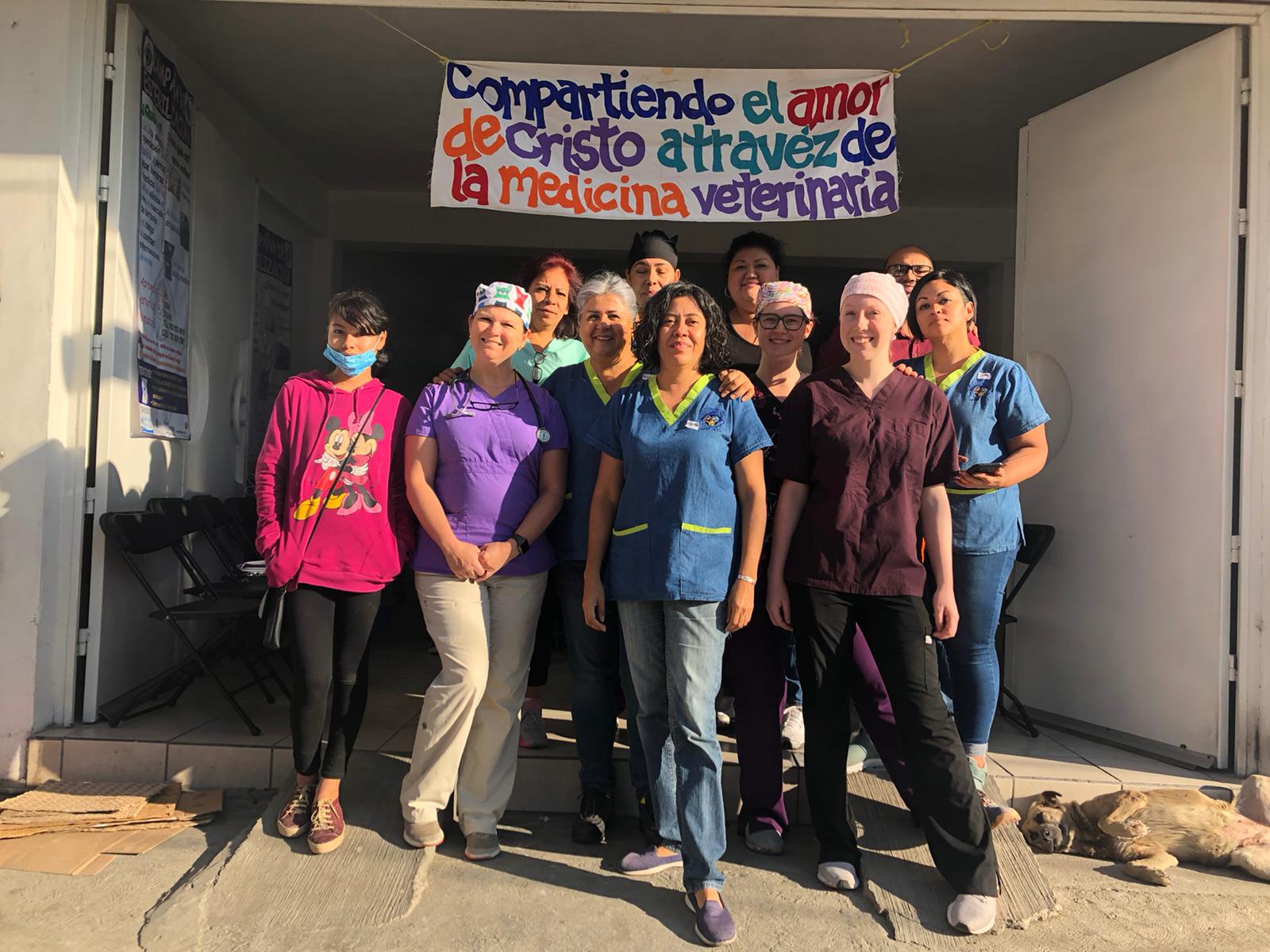
Our team was small – two veterinary students, one US veterinarian and one Mexican veterinarian, along with a whole team of support volunteers.

IMG_20191217_163738143

View from Cristo de Taxco

WhatsApp Image 2019-12-20 at 12.17.38 PM

Our team

Jen and I wrote our NAVLE and hopped on a plane two weeks later to Mexico City – then travelled to Cuernavaca and finally to Taxco – a beautiful little colonial town built on the mountains. There we worked with A.P.A.T. A.C. Taxco – a non-profit working hard to provide veterinary services to low-income families with the goal of ultimately eliminating the pet overpopulation crisis (that most of Mexico is dealing with). Our accomodations were provided by the hotel owner who uses a large proportion of hotel profits to pay for stray dog veterinary care. During our two-day clinic, we provided 64 sterilization surgeries for the pets of low income families and stray animals. IMG_20191217_170649787

Having this been the first time CVM and Yuma Free Clinic has worked alongside an organization in this area, we wanted to have a small clinic to establish our services. Our goal was to provide 5-10 surgeries – a pioneer clinic so to speak. This evolved quite a bit into the 64 surgeries that occured.

We used a better anesthesia protocol for the animals that previous – telozol, xylazine and tramadol, along with injectable meloxicam and oral rimadyl to go home. We will likely use this same protocol on our upcoming trip as it provides better pain control than our previous trip in May. We also purchased emergency drugs, an endotracheal tube and ambu-bag for CPR, as well as IV fluids and catheters. IMG_20191219_175737832

In this upcoming trip in May, we will be spending one week in San Luis Rio Colorado and one week in Taxco. We will be providing these services with a slightly larger team –  Parker will also be joining us and helping out where possible.

I have really enjoyed planning these trips with CVM and Yuma Free Clinic – it gives me a greater understanding for the variation in medicine across borders and costs associated with providing these services. Most of all my soul is filled by providing this care to pets and IMG_20191219_145806433their people. We will be fundraising for supplies as well as for our own costs associated with travel and accomodation. If you would like to help contribute to either of these, please see the following:

Option 1 – Donate to Parker and Brenna’s trip costs.

Click the following link. This will lead you to the CVM’s give to an individual page (we are sharing an account). The blanks at the top of the page should be pre-filled in with my name and account number. All donations greater than or equal to $25 are eligible for a tax receipt. You will NOT be added to CVM’s mailing list IMG_20191218_152903590unless you explicitly request it. CVM will only use your address to send you a tax-receipt. Our individual account charges funds in Canadian currency.

Option 2 – Donate to the cost of surgical supplies.

Click the following link. Fill out the payment method (make sure you select Canadian Funds first, or our group will not show up at the next step). Select “Calgary Students” under the “Where do you want your gift to go?” drop down menu. All donations greater than or equal to $25 are eligible for a tax receipt. You will NOT be added to CVM’s mailing list unless you explicitly request it. CVM will only use your address to send you a tax-receipt.

Thank you for reading – I will be posting soon about my January rotations!

Erskine, Alberta

For 4 weeks in November, I spent time in Erskine, Alberta learning the ins and outs of production animal medicine – namely cows.
Given that cattle medicine in Alberta is highly seasonal, my month consisted of pregnancy diagnosis. While the traditional way to check if a cow is pregnant is to reach your arm into their rectum and feel around, the clinic I spent the month with used a long ultrasound probe instead. Over the course of the month, I got to diagnose pregnancy in over 500 cattle, using a combination of rectal palpation (the arm method) and ultrasound. On the coldest days I spent time studying for my my licensing exam (NAVLE) inside.
While production animal medicine is not my cup of tea, I gained a great appreciation for the small-town community vibe. Everyone was so friendly. I had an opportunity to do some equine dentistry, some bull and stallion castrations, do an abdominal surgery on a cow by myself and join some people in their homes for coffee.
After spending time in the beautiful prairies on the road, I was inspired to pursue some mixed animal practice upon graduation. After this cold snap in January which lasted two weeks in the -30’s to -40’s, I’m carefully reconsidering that dream, especially in this province!

Overall, I would have to say that my time in Erskine was one of my favorites this year, despite being one of the most intimidating prior to arrival. I am so grateful for the truck talks I had with the vets on the road, and an overall welcoming environment.

P.S. I taught myself how to repair a flat tire all by my lonesome so I could drive home to Calgary one evening. The culprit is pictured below.

IMG_20191119_214920098

Flat tire culprit 😦

IMG_20191121_090432041

Wompus, my little kitty friend.

IMG_20191122_104951747

My last day – covered with more cow poop than I’d like to admit.

IMG_20191106_172948107

The beautiful sunset seen from the house I lived at for the month.

ASPCA Spay/Neuter Alliance

I have just completed two incredible weeks at the ASPCA Spay/Neuter Alliance in Asheville, North Carolina. This was by-far my favorite rotation experience. It was actually an externship I set up on my own nearly two years ago, and then went through an approval process to receive school credit for it.

During this experience, I had the opportunity to learn how to do efficient spay/neuter surgery to help reduce pet overpopulation. The ASPCA Spay/Neuter Alliance does surgery for a multitude of shelters who transport their animals there.

On the first day, we had an introduction, knot-tying class and demo surgeries in our teams of 4 by our instructors. They do very unique methods of surgery that was not taught in school, including:

  • Small spay incisions (1-2cm long, versus the typical 5-6cm done in school)
  • Using spay hooks aka. “snook hooks” to find the uterus in the tiny incision
  • Pedicle ties in cats (also known as auto-ligation – typically suture is used to tie vessels off before cutting, this involves tying vessels to themselves instead)
  • Uterine cut-aways in dogs (cutting the ovary/uterus away after clamping the vessel, then using suture to tie the vessel off)

When I did my first cat spay in 2018, it took me 70 minutes. Even my first cat spay on this externship took me 40 minutes. By the end of this externship, I was able to perform a cat spay in just 17 minutes. Why does this matter? In a general practice setting, it is probably not a big deal. However, in shelter environments, spay/neuter organizations and spay/neuter trips (such as the one I went on in May), it is important to do surgery efficiently in order to get all animals done who have been signed up. Our instructors at this externship can do an average of 40 sterilization surgeries each in a day, whereas an average veterinarian in a small animal clinic may do 2-6 in a day.

During the rotation, I stayed at the student dorms that were built just for this learning opportunity. There were twenty students there during my two-weeks, with 10 surgery tables and five instructors. During the evenings, we had time to explore the city of Asheville, NC. On the weekend we went on a couple of hikes nearby. North Carolina has some beautiful old mountains, with tons of trees.

I am so grateful for the opportunity. I got to perform 17 sterilization surgeries on my own (including an umbilical hernia repair) and more importantly gained new skills to be a valuable veterinarian upon graduation.

Some photos from the hikes:

For anyone interested in the ASPCA Spay Neuter Alliance, go to https://www.aspcapro.org/training/site-training